

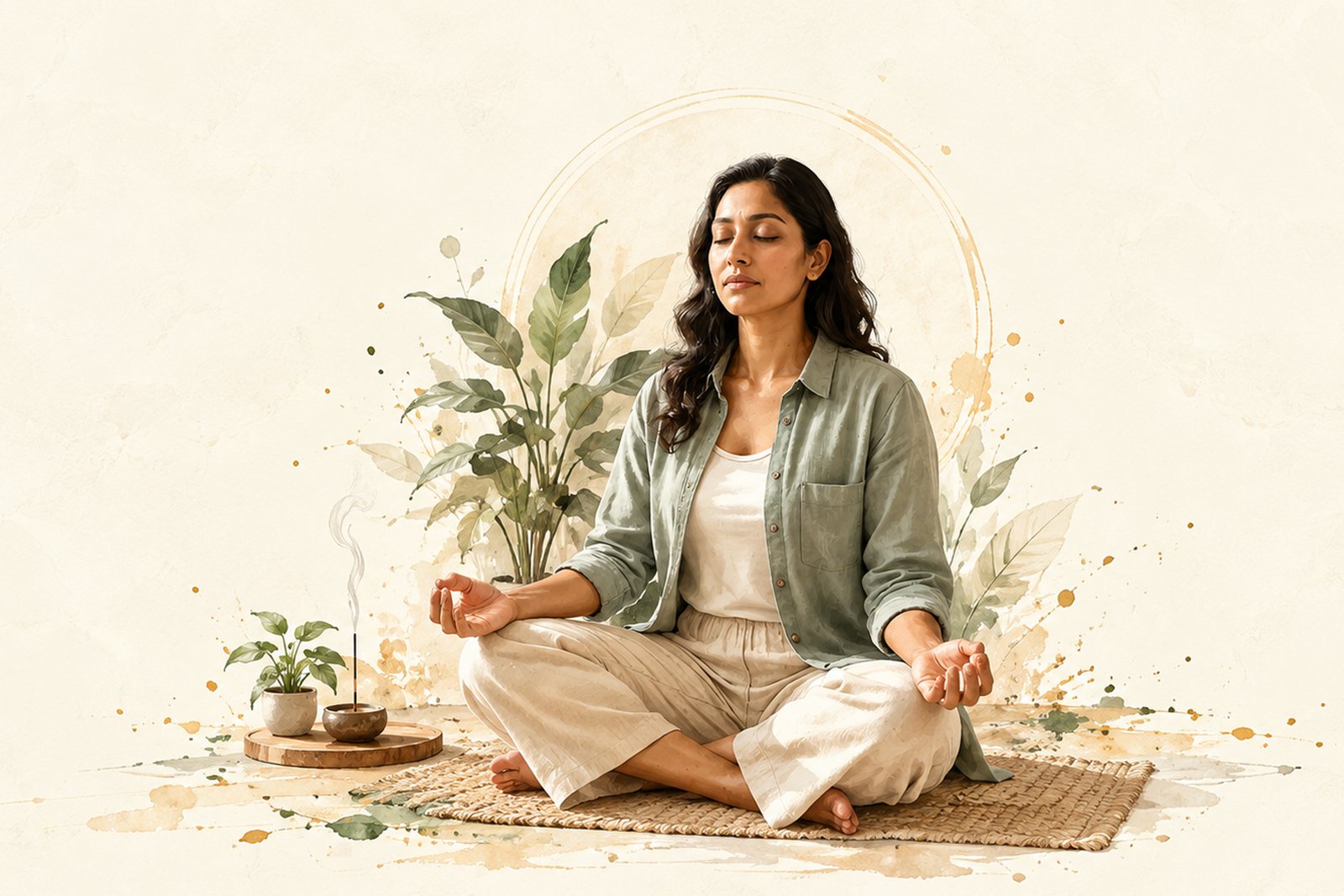
Yoga Is More Than a Physical Practice
The word Yoga comes from the Sanskrit root yuj, meaning to join, unite, or bring together. Traditionally, Yoga is understood as a disciplined path toward greater mastery of the mind and a deeper understanding of oneself.
While physical postures have become the most familiar expression of Yoga today, the classical tradition encompasses far more: ethical living, disciplined practice, breath, concentration, meditation, and the cultivation of inner awareness.
At Tattva Bodha, we explore Yoga as a complete approach to living—one that can be studied, practised, and gradually integrated into everyday life.
From Restlessness to Awareness
Much of everyday life is shaped by constant activity—thoughts, reactions, desires, responsibilities, and distractions. Yoga offers a systematic approach to becoming more aware of these movements rather than being completely driven by them.
Through practice, Yoga invites us to cultivate steadiness, attention, discipline, and inner clarity.
The purpose is not simply to become more flexible or physically strong. The deeper purpose is to understand how the body, breath, senses, mind, and awareness relate to one another.
THE FOUNDATIONS OF YOGA
Yoga rests upon a tradition of disciplined living and inner inquiry.
It begins with how we relate to the world around us, how we conduct ourselves, how we care for the body, how we work with the breath, and how we gradually develop a steadier and more attentive mind.
The classical framework of Ashtanga Yoga describes eight interconnected limbs. Together, they provide a progressive map from ethical foundations and disciplined practice toward concentration, meditation, and deeper absorption.
THE EIGHT LIMBS OF YOGA
Yama
Yama refers to ethical disciplines that guide our relationship with others and with the world. They encourage us to examine how our actions, words, and intentions affect ourselves and those around us.
Niyama
Niyama refers to personal observances and disciplines that support inner order, cleanliness, contentment, self-discipline, self-study, and a deeper relationship with the sacred.
Asana
Asana is the practice of establishing the body in a steady and comfortable manner. Traditionally, the purpose of physical practice is not merely exercise, but to prepare the body for steadiness, awareness, and deeper practice.
Pranayama
Pranayama is the disciplined cultivation and regulation of the breath. Working with the breath can help refine attention and develop greater awareness of the connection between body and mind.
Pratyahara
Pratyahara is the turning of attention inward. Rather than allowing the senses to continually pull the mind outward, practice develops the ability to observe and regulate our relationship with sensory experience.
Dharana
Dharana is concentration—the cultivation of a mind capable of remaining steadily directed toward a chosen object or point of attention.
Dhyana
Dhyana is meditation. As concentration becomes continuous and less interrupted, awareness settles into a deeper and more sustained state of observation.
Samadhi
Samadhi describes a profound state of absorption in which the usual divisions between the observer, the act of observing, and the object of observation become increasingly subtle.
These eight limbs are not simply a checklist to complete. They represent an interconnected path of cultivation, where each dimension supports the others.
YOGA AS A WAY OF LIVING
Yoga does not have to remain confined to a mat or a particular time of day.
Its principles can influence how we respond to difficulty, how we relate to others, how we use our attention, and how consciously we move through everyday life.
A moment of awareness before reacting can become practice.
A steady breath during difficulty can become practice.
Observing a thought without immediately following it can become practice.
Choosing a considered response instead of an automatic reaction can become practice.
In this way, Yoga gradually becomes less about something we perform and more about a way of living with greater awareness.
YOUR PRACTICE BEGINS WHERE YOU ARE
There is no single starting point for everyone.
Some begin with the body. Others begin with the breath, meditation, study, or a desire to understand the mind.
What matters is the willingness to observe, practise, and learn.
A meaningful practice does not require perfection. It develops gradually through consistency, attention, and honest observation.
Begin where you are.
Work with what you have.
Allow understanding to grow through practice.
YOGA AND THE MIND
One of the central concerns of Yoga is the nature of the mind.
The mind is constantly influenced by memory, desire, fear, habit, expectation, and sensory experience. Without awareness, these movements can shape our actions before we have had the opportunity to understand them.
Yoga introduces practices that help us observe these movements with greater clarity.
Instead of immediately asking, “How do I change this thought?”, practice can begin with a simpler question:
“What is happening within me right now?”
That shift—from immediate reaction to attentive observation—is an important part of the journey.
YOGA AT TATTVA BODHA
At Tattva Bodha, Yoga is approached as a path of learning, practice, and self-understanding.
We bring together traditional knowledge and a contemporary approach so that the principles of Yoga can be understood clearly and explored meaningfully in everyday life.
Our aim is not to reduce Yoga to physical exercise, nor to present it as something distant from ordinary life.
We explore Yoga as a living tradition—one that invites us to examine the body, breath, senses, mind, attention, conduct, and awareness.
Through study and practice, we gradually move from information toward understanding, and from understanding toward lived experience.
A PATH OF PRACTICE AND INQUIRY
Yoga offers a path, but the journey is personal.
The teachings provide frameworks, practices, and questions. Practice allows those teachings to become part of our own experience. There may be periods of clarity and periods of restlessness. There may be progress, pauses, questions, and new beginnings. All of these can become part of the learning.
The invitation is simply to continue observing, practising, and enquiring.
EXPLORE THE YOGA PATH
Begin with the foundations.
Explore the principles of Yoga, understand the classical framework, and discover practices that can support greater steadiness and awareness. From there, go deeper through articles, guided learning, and courses designed to help you explore Yoga step by step.
Yoga is not only something to know.
It is something to explore.
It is something to practi